
Transformation of life sciences over the past decade
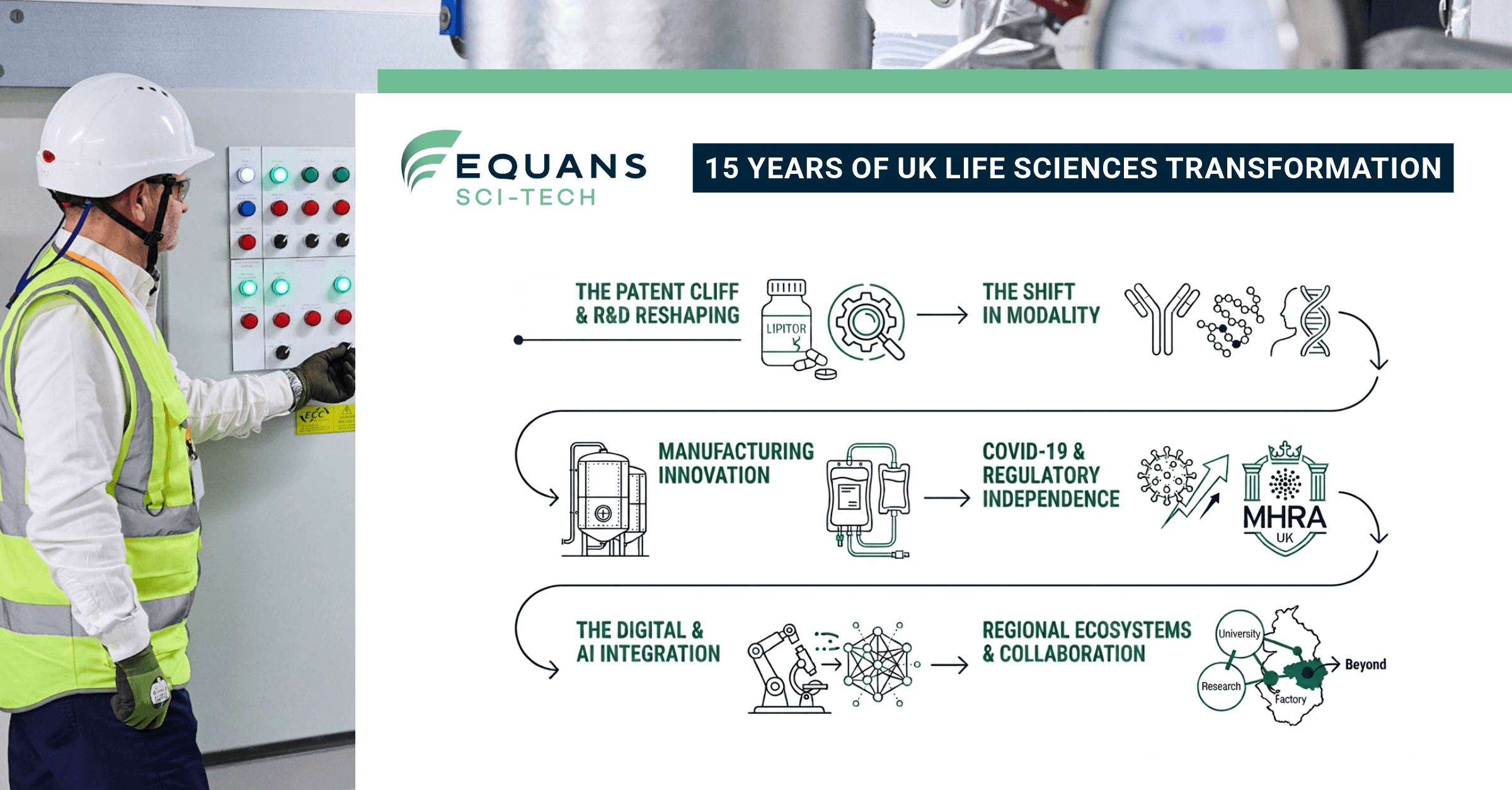
From blockbusters to precision medicine: Navigating fifteen years of life science innovation
The UK's pharmaceutical manufacturing landscape has undergone a radical transformation over the past fifteen years, moving from an era dominated by large-scale "blockbuster" drugs to a sophisticated ecosystem of personalised medicine and advanced therapies. At the recent Bionow Pharma Manufacturing Conference, industry leaders highlighted that navigating this complexity requires a fundamental rethink of how we design, build, and operate facilities.
The shift in modalities: Embracing complexity
In 2011, the industry faced significant "patent cliffs," leading to a major shift in R&D strategies toward highly complex new modalities. We have transitioned from standard monoclonal antibodies to complex fusion proteins, tri-specifics, and cell and gene therapies.
This evolution has dictated several changes in manufacturing:
- Smaller batch sizes: New therapies often require much smaller, more personalised approaches compared to the linear development pathways of the past.
The single-use revolution: Adoption of single-use technology has been a major pivot, reducing cross-contamination risks and allowing for faster product transfers than traditional stainless-steel facilities.
Agility at the core of facility design
Modern facility design is no longer just about construction; it is about building in flexibility and scalability to match specific production requirements while allowing for future growth. A key challenge in the UK remains the modernising of ageing infrastructure, often by "bolting on" new areas or redeveloping existing spaces to accommodate modern equipment.
Furthermore, supporting the journey from discovery to first-in-human trials is vital. Success often depends on thinking about manufacturing at the very start of the innovation phase rather than as an end activity.
Regulatory excellence and regional ecosystems
Post-Brexit, the MHRA has established itself as an independent, technically driven regulator. Its ability to focus on technical requirements rather than just process was clearly demonstrated by the accelerated approval of COVID-19 vaccines.
This regulatory environment is bolstered by powerful regional ecosystems, such as the "Northwest Supercluster". By linking universities, NHS trusts, and industry partners, these clusters create a seamless pathway from research to commercial manufacturing.
Future-proofing through sustainability and digitalisation
With UK electricity costs significantly higher than in other regions, energy efficiency is now a critical component of controlling operating costs. Facilities are increasingly integrating AI and intelligent building management systems (BMS) to monitor power spikes, occupancy, and temperature in real-time. As automation handles more manual tasks, the role of the operator is also evolving, requiring a continuous investment in data analysis and strategic upskilling.
How Equans Sci-Tech supports this evolution
At Equans Sci-Tech, we understand that technical expertise must be matched by a strategic vision for facility design that can adapt to a rapidly changing world. We are committed to building the critical infrastructure that sustains this pace of change by considering manufacturing from the earliest stages of the innovation process. By combining our deep understanding of facility requirements with a focus on flexibility and scalability, we help ensure our partners remain at the forefront of pharmaceutical excellence